Field guide
An Abandoned Underground Oil Tank: What the Records Should Show
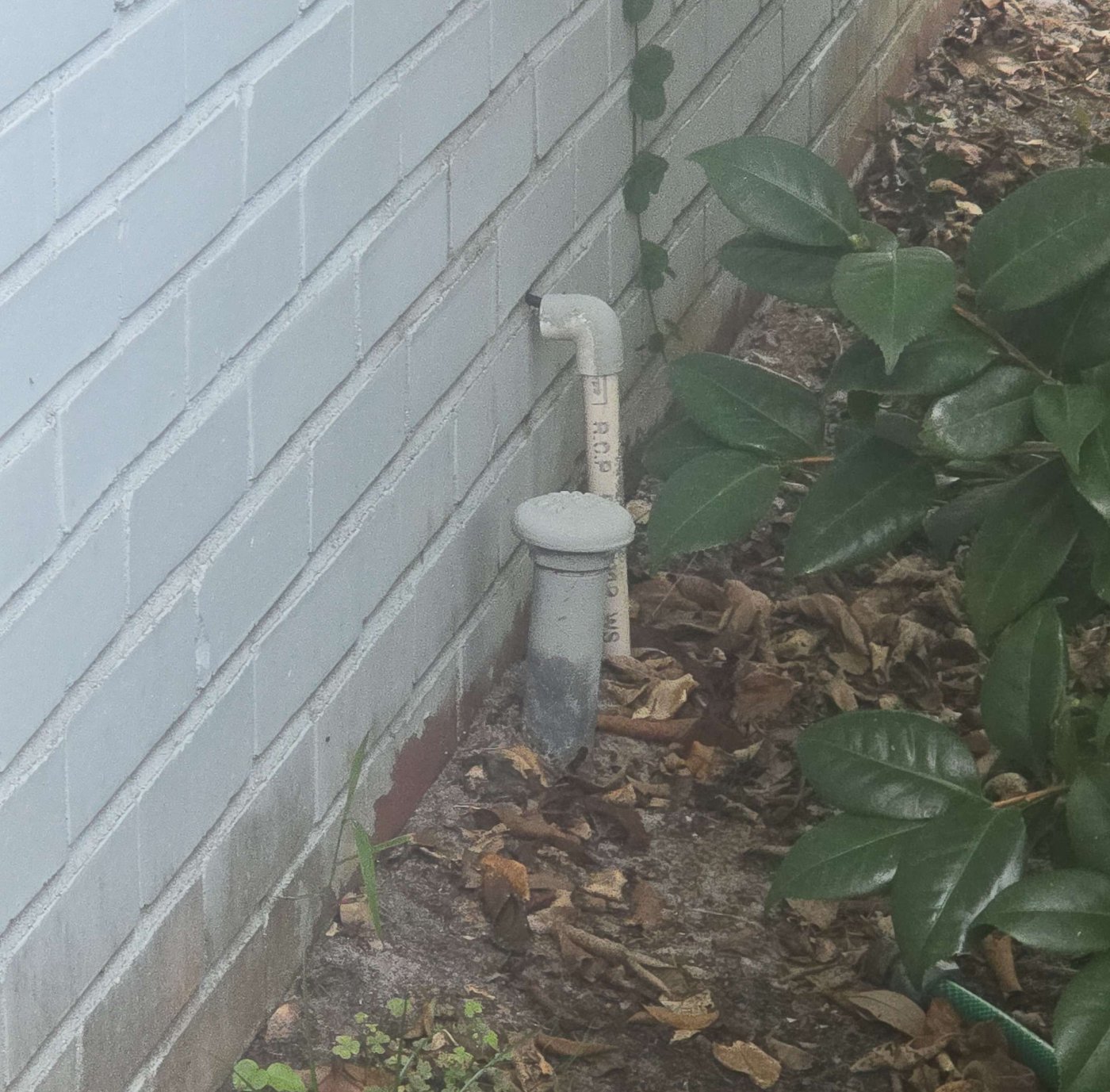
What we saw
On a recent inspection of an older Northeast Florida home, a capped metal pipe stood a few inches out of the soil beside the exterior wall — the photo above. To most eyes it reads as sprinkler hardware. It is the vent of a buried fuel-oil tank, left from the era when the house heated with oil. Whether the tank was ever formally decommissioned, or still sits full of residue, could not be determined on site — and that uncertainty is exactly the point of this guide.
Why buried tanks matter
An underground tank that was simply abandoned in place can corrode and release remaining oil into the surrounding soil and, eventually, groundwater. That risk is why lenders, insurers, and buyers' attorneys treat an undocumented tank as an open question on a transaction: it can affect insurability, financing, and future resale until its status is documented.
What the records should show
Formal decommissioning is a documented process — typically the tank is pumped out, cleaned, and either removed or filled with an inert material, with written certification of the work. Depending on the era and the jurisdiction, that paper trail can live in more than one place: the closure or removal paperwork itself, state environmental-agency tank records, and sometimes related building or mechanical permits from when the home's heating system was converted — a furnace replacement or HVAC conversion permit is often the visible end of an oil era. A property's permit history is one of the first places we look for that conversion story.
What to do
If you're buying (or selling) a home with tank evidence: ask the owner for any decommissioning documentation first — it may simply exist. If it doesn't, a licensed environmental contractor or underground-storage-tank specialist can determine the tank's status and produce the certification that puts the question to rest. Doing it during a purchase contingency period keeps the cost conversation on the right side of the closing table.
Sources and records
This guide draws on a real inspection observation (anonymized), the decommissioning practices described in state environmental storage-tank programs, and the permit records we hold. Requirements vary by jurisdiction and era — for a specific property, the authoritative answers live with the local jurisdiction and the state environmental agency.
Researching this area? See the Flagler County permit records hub.
Curious what permit records are on file for a specific address? Search it free.